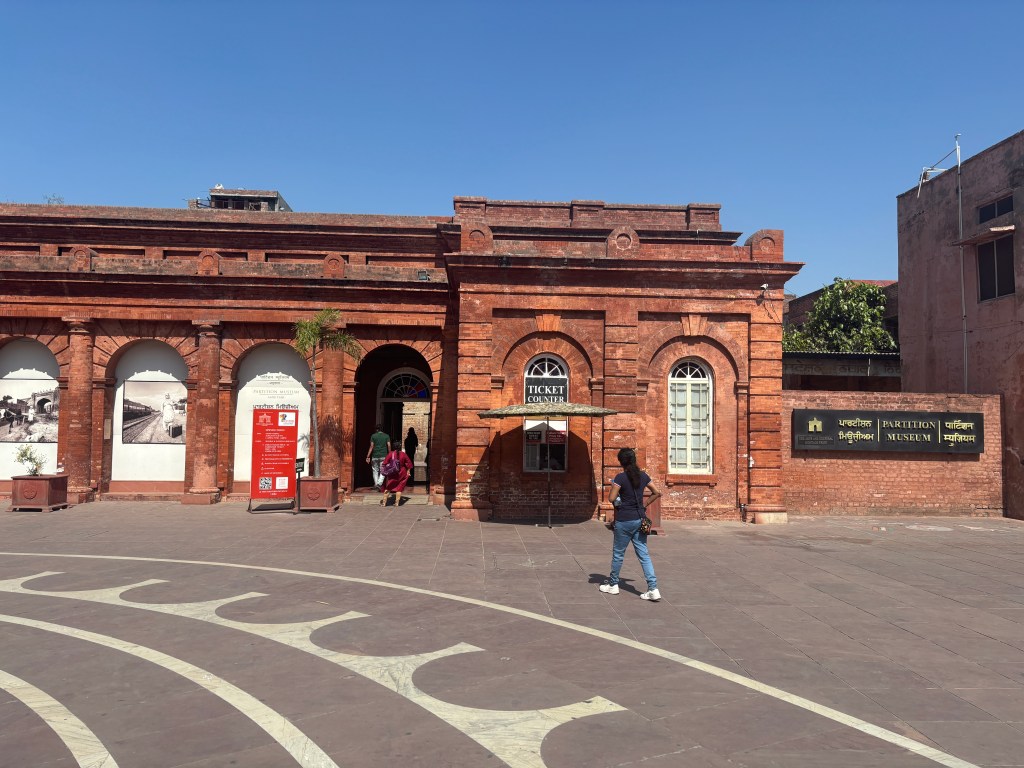
“Boundaries are scars left by unhealed wounds.” I recall reading this somewhere, though I can’t quite place the source. My first visit to the Partition Museum in Amritsar was an unexpectedly moving experience. The opening gallery echoed the strains of Amar Shonar Bangla, evoking a nostalgic warmth for a bygone era—even if I don’t feel personal nostalgia for Partition itself. For me, Partition remains one of the most underrated events in Indian history and the entire subcontinent, a narrative often absent from today’s mainstream discussions about India as a nation or idea. Despite the absence of a personal past with Partition, the museum stirred feelings that were both heartwarming and heart-wrenching; it celebrated the syncretic culture that once thrived without being confined by borders—whether in music, literature, sports, or everyday human interactions—and laid bare the unimaginable hardships that people endured. This confluence of beauty and sorrow makes it one of my best museum experiences in India.
A Nearly Perfect Museum
The museum excels on every front—from its convenient location and accessible layout to its reasonable ticket pricing and compelling presentation. Housed in the Town Hall of Amritsar, a colonial-era building that once served as British headquarters and a jail, the museum’s very walls are steeped in history. This choice of location is a poignant reminder of the turbulent past the museum seeks to honor.
The building’s design artfully marries heritage conservation with modern museum standards. Careful preservation of its historical essence is balanced with a layout that guides visitors intuitively through thematic sections. The museum presents a carefully curated collection of refugee artifacts, archival materials, oral histories, and art pieces. Each thematic section works in harmony to educate visitors while evoking empathy and introspection. This balance of storytelling and historical preservation allows us to engage with the memories of a generation shaped by both resilience and loss.
The Genesis of a Cultural Landmark
The museum’s creation is an inspiring narrative in its own right. It illustrates how cultural heritage can be preserved through grassroots initiatives and the steadfast commitment of the community. Moreover, understanding the key milestones of its journey provides invaluable insights into what it takes to build a museum. Each defining moment not only enriches our knowledge of museum development but also invites us to reflect on the transformative power of collective effort in honoring our shared past.
Driven by a dedicated grassroots effort: Despite the immense impact of Partition and the significant loss of life and property it caused, there was, until recently, no dedicated museum or memorial for the millions affected. In early 2015, a small group of determined individuals came together with the specific aim of filling this void. This underscores the potential of citizen-led initiatives in spearheading cultural heritage projects.
Formalising the initiative through a registered Trust: To provide a structural and legal framework, The Arts and Cultural Heritage Trust (TAACHT) was registered in New Delhi, India, with the primary objective of establishing the world’s first museum and memorial on the Partition. This demonstrates the necessity of establishing a formal organisation to manage and oversee such projects.
Extensive consultation with diverse stakeholders: Throughout the first half of 2015, TAACHT conducted consultations with a wide range of experts. These included scholars, researchers, filmmakers, authors, artists, journalists, and, most importantly, Partition survivors themselves. This highlights the value of inclusive engagement and gathering diverse perspectives from those who have direct experience and relevant expertise.
Public engagement and garnering widespread support: The first public consultation, held in August 2015, saw the participation of over 1500 people, both young and old, who shared their thoughts and overwhelmingly expressed their support. This demonstrates the importance of early public engagement and building community buy-in.
Adopting a “People’s Museum” approach to collection building: Unlike many museums that begin with existing private or government collections, the Partition Museum uniquely started with the resolve to build its collection through a collective effort from hundreds of Partition-affected families. This model emphasises community ownership and the power of personal contributions in creating a meaningful representation of heritage.
Actively seeking and valuing personal stories and artefacts: The museum painstakingly built its collections by inviting Partition families to share their most precious family artefacts and oral histories. These personal contributions are considered the heart of the Partition Museum, telling the history more profoundly than textbooks. This highlights the significance of prioritising personal narratives and tangible heritage in representing cultural experiences.
Leveraging volunteer support for crucial tasks: Extensive work was undertaken in archives worldwide by volunteers, both young and old, who believed in the museum’s mission. This demonstrates the vital role that volunteerism and dedicated individuals can play in heritage preservation efforts.
Strategic use of exhibitions to build momentum and collections: The collections were showcased in exhibitions around the country in 2015 and 2016, serving as a further impetus for more Partition families to contribute. This indicates the effectiveness of using temporary exhibitions to raise awareness and encourage participation.
Securing partnerships and collaborations: TAACHT partnered with and received support from numerous institutions in its efforts. The museum also benefited from the wisdom and insight of various professional institutions and leading academics. This underscores the importance of building strategic alliances and seeking expert advice for a successful heritage project.
Phased opening to commemorate a significant anniversary: The world’s first Partition Museum opened in Amritsar on 24 October 2016, with a curtain-raiser exhibition. The full museum with fourteen galleries was opened on 17 August 2017, marking the 70th Anniversary of the Partition and designated as Partition Remembrance Day. This suggests the strategic value of aligning the opening with significant historical dates to enhance impact and commemoration.
Continuous development and community engagement: Since its opening, the Partition Museum continues to build its collections and archives and welcomes ongoing support. This reflects the ongoing nature of heritage preservation and the need for sustained community engagement.
Final Thoughts
Visiting the Partition Museum was not merely an excursion into the past; it was an immersive journey that connected me to the layered history of a nation. The museum’s thoughtful design, inclusive narrative, and community-driven origins serve as a compelling model for how we can preserve and represent our cultural heritage. For anyone seeking to understand the complex legacy of Partition—and the syncretic cultural spirit that once transcended borders—this museum is an invaluable experience.

 Museophile
Leave a comment