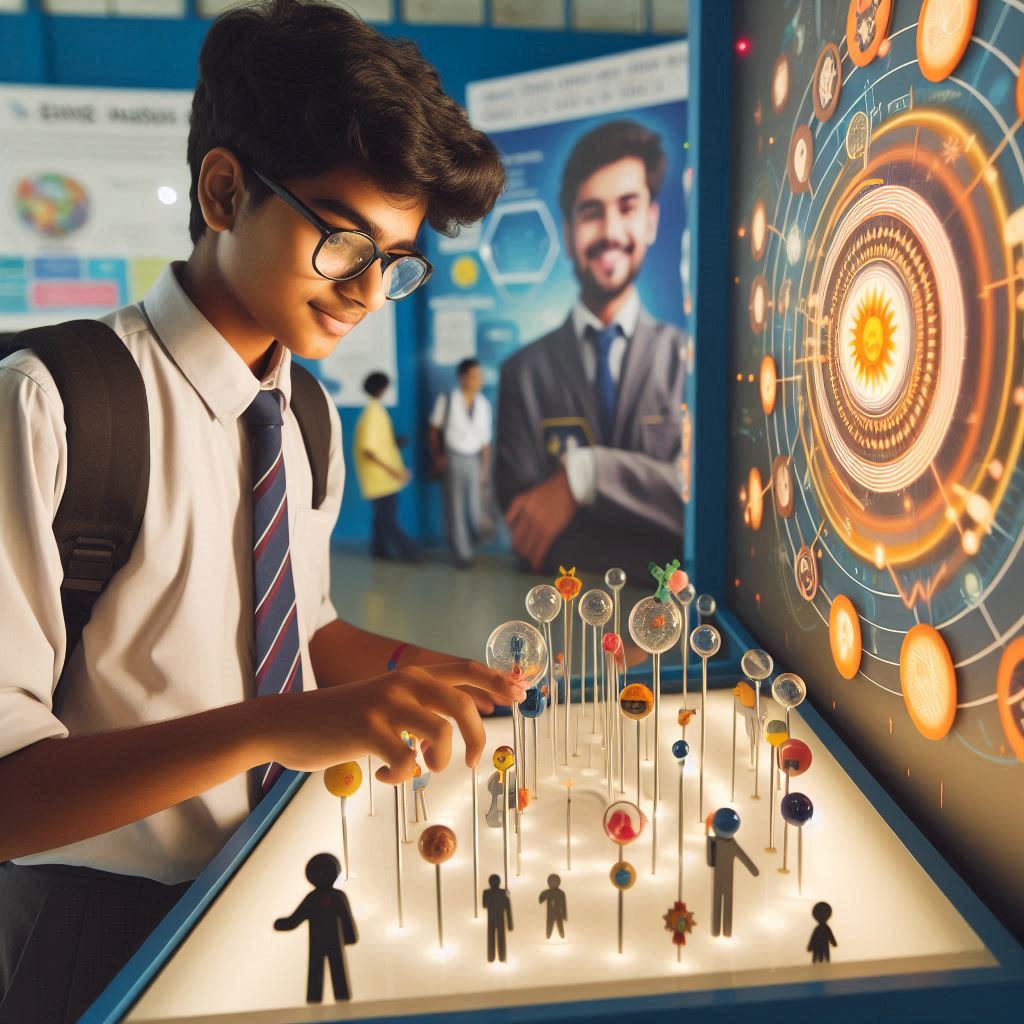
India’s science centres and museums play a crucial role in fostering a scientific mindset and empowering youth. As National Science Day 2025 approaches, with its theme “Empowering Indian Youth for Global Leadership in Science and Innovation for Viksit Bharat,” these institutions are set to shape the future of STEM (Science, Technology, Engineering, and Mathematics) education and innovation in India. Science museums and centres showcase the development of science and technology through historical artefacts and scientific instruments while educating the public through captivating interactive exhibits. These exhibits cover diverse topics, including dinosaurs and fossils (natural history), the solar system and stars (space), motion and mechanics (physics), the composition of matter (chemistry), the human body (biology), and the latest technological inventions. By providing accessible, engaging, and hands-on experiences, science centres and museums inspire students to explore STEM fields and aspire to become future leaders in science and technology.
A Glimpse into the Past: The Genesis of Science Museums
To fully appreciate the current landscape of science centres in India, it is essential to understand their historical context. The concept of museums, as we recognise them today, is relatively new, gaining momentum in the sixteenth and seventeenth centuries before truly taking shape in the eighteenth and nineteenth centuries. Delving further back, the origins of science museums can be traced to the Renaissance, where private collections owned by royalty, scholars, and wealthy individuals began to emerge. These collections, evolving from ancient treasure chambers motivated by wealth and prestige, gradually incorporated “curiosities,” both natural and magical, alongside religious artefacts during the Middle Ages.
The Renaissance marked a resurgence of scientific interest, leading to the rise of “artificial curiosities,” showcasing human inventions and skills. The term “museum” gained traction in the late 16th century, superseding earlier terms like “cabinet de curiosité” and “Kunstkammer”. These initially private collections transformed into centres of scientific activity and education, further propelled by the Scientific Revolution. The Industrial Revolution then underscored the need for scientific education, transforming museums into public educational resources. The Great Exhibition of 1851 held in London spurred the creation of prominent science museums, while the 20th century saw the emergence of interactive science centres, pioneering hands-on learning and engagement.
From Independence to Innovation: India’s Science Museum Evolution
Following independence, India placed a strong emphasis on science and technology as crucial drivers of economic growth and social transformation. Visionary leaders like Jawaharlal Nehru championed a scientific temper, embedding it in the Constitution as a fundamental duty. This commitment led to the establishment of institutions dedicated to promoting science education, particularly among the masses, where literacy and access to formal education were limited.
The first science museums in India, inspired by European models, emerged in the 1950s. The Birla Industrial & Technological Museum (BITM) in Kolkata (1959) and the Visvesvaraya Industrial & Technological Museum (VITM) in Bangalore (1965) were pioneering efforts. These early museums primarily focused on thematic displays, showcasing industrial and technological advancements through models and artefacts. However, their lack of interactive elements limited visitor engagement.
Recognising the need for greater interaction, Indian museums began incorporating “Popular Science” galleries featuring hands-on exhibits by the 1960s. Simultaneously, efforts to reach rural populations led to the creation of mobile science exhibitions. The Museobus, introduced by BITM in 1965, brought science education to remote areas, bridging the urban-rural divide. The 1970s marked a significant shift towards activity-based science centres, influenced by global trends like the Exploratorium in San Francisco. The Nehru Science Centre in Mumbai (1985) epitomised this transformation, emphasising interactive and participatory learning. Science parks, offering outdoor exhibits, further enriched the visitor experience, making science education both fun and accessible.
NCSM: A National Catalyst for Science Popularisation
A pivotal moment in the history of Indian science centres was the establishment of the National Council of Science Museums (NCSM) on April 4, 1978. Tasked with creating and managing science centres and museums nationwide, NCSM took over existing science museums in Bangalore, Mumbai, and Kolkata. Starting with three units in 1978, NCSM rapidly expanded its network to 26 units, comprising four national-level centres and numerous Regional Science Centres (RSCs) and Sub-Regional Science Centres (SRSCs). These centres emphasize interactive and participatory visitor experiences, adapting to global scientific developments. The establishment of the Central Research & Training Laboratory (CRTL) in Kolkata marked a significant milestone, leading to the creation of experience-based interactive exhibits. In the 21st century, NCSM has embraced digital technologies, producing multimedia presentations, simulators, and virtual reality exhibits.
The Modern Science Centre: A Hub of Innovation and Discovery
Today, Indian science centres have evolved into dynamic hubs where curiosity thrives. Visitors can engage with interactive exhibits across galleries dedicated to various science themes, explore the wonders of the universe in planetariums, enjoy educational films in 3D theatres, and unleash their creativity in innovation hubs. These centres also offer a diverse range of workshops, live demonstrations, and special exhibitions, making science fun and accessible for all. From experimenting with scientific concepts to experiencing hands-on innovation, there’s something for everyone to discover and enjoy, making a visit to these centres a must for anyone with a thirst for knowledge and adventure.
Beyond the NCSM network, independent science centres have emerged in cities like Chennai, Thiruvananthapuram Hyderabad, Ahmedabad, Agartala and Jaipur. Private ventures, including science amusement parks, have also introduced profit-oriented models, reflecting a growing demand for innovative science education.
Looking Ahead: Empowering the Next Generation of Scientific Leaders
As India progresses, science centres and museums are poised to play an increasingly vital role in empowering the youth and fostering scientific temper and a passion for innovation. National Science Day 2025 serves as a unique opportunity to recognise their contributions and inspire continued efforts to promote scientific awareness and engagement across the nation. By embracing innovative approaches, prioritising inclusivity, and adapting to the evolving needs of society, these institutions can continue to shape future generations of scientific leaders and contribute significantly to India’s progress on the global stage.

 Museophile
Leave a comment