Ancient Civilizations and the Preservation Challenge
Throughout history, humans have built societies, civilizations, and empires. Despite having long since vanished, these civilizations continue to be recognized and studied thanks to the structures and artifacts they left behind. However, these treasures cannot be preserved indefinitely. Natural progression of time, as well as man-made and natural disasters, have led to the destruction of our historical heritage, which has long served as our window to the past. Experts have long struggled with the issue of how to preserve our cultural history, but it appears we have finally solved it.
3D Technology in Preservation
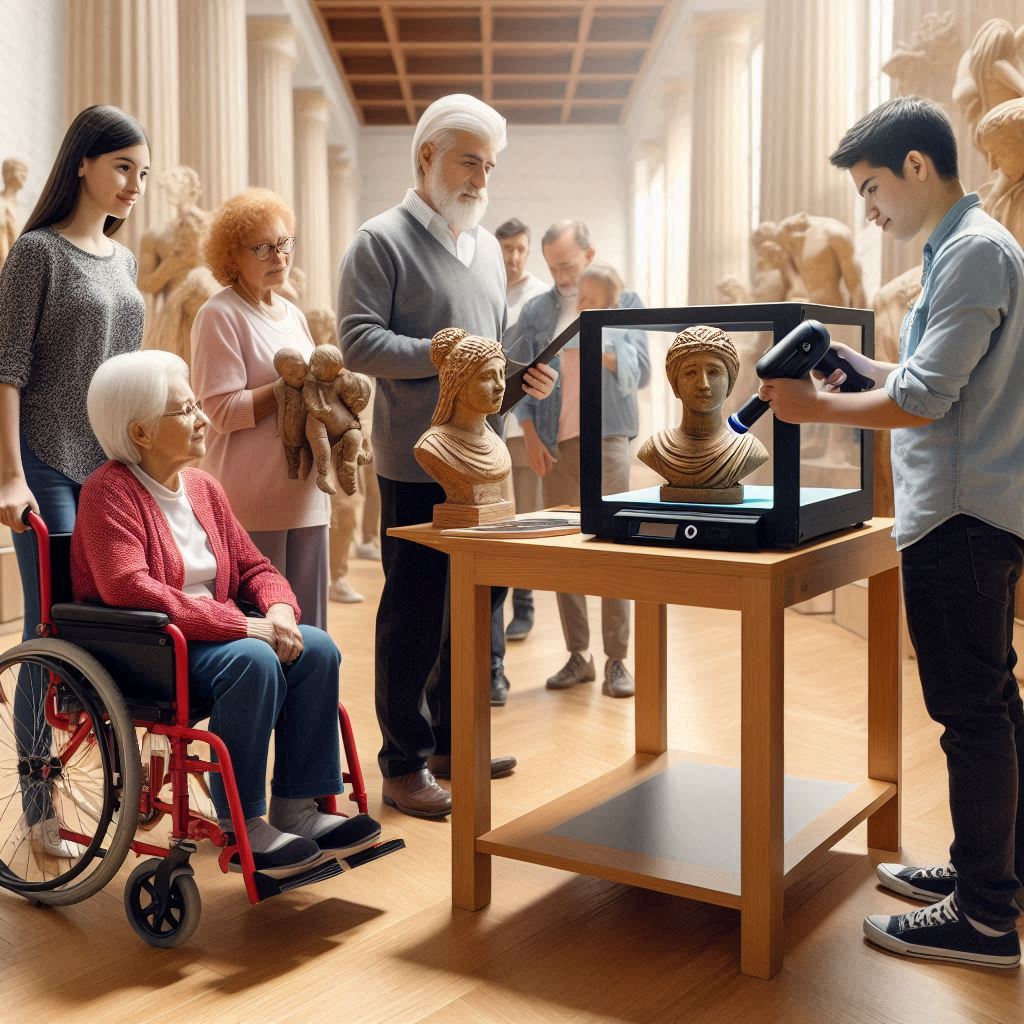
Experts are currently preserving ancient artifacts with 3D printing and 3D scanning technology to ensure the gathering, storing, and transmission of knowledge to the following generation. These technologies offer innovative solutions to the challenge of preserving our cultural heritage.
Understanding 3D Printing
3D printing, also known as additive manufacturing, creates physical objects from digital 3D models by adding material layer by layer. This process has various applications, including prototyping, product development, art, and education. To 3D print an object, you need a 3D model, which can be created using software tools or downloaded from a 3D library. The 3D printer then follows the instructions from a sliced file, printing each layer until the object is complete.
Understanding 3D Scanning
3D scanning involves analysing real-world objects to collect data and digitally recreate their shape and appearance. This process uses devices like laser scanners or physical probes to capture intricate details, forming point clouds that are then converted into 3D models. These digital models can be edited, modified, or printed using software tools.
Restoration, Reconstruction AND Replication
Museum artifacts can be fragile, environmentally sensitive, and immensely valuable, making it a challenging task to make them accessible for close observation and research. 3D scanning is more accurate than the human eye and can digitally capture intricate details. The digital models thus created can be 3D printed and made available for presentation and close observation. Together, 3D scanning and 3D printing can restore and reconstruct historical artifacts and monuments at risk from conflicts, natural disasters, or time erosion. This not only preserves cultural heritage but also makes it accessible for research and observation without damaging the original items.
Enhancing Museum Presentations
3D scanning and 3D printing have revolutionized the presentation of artifacts in museums and exhibitions. These technologies offer various views, scales, animations, sounds, and stories, providing greater flexibility and creativity in design, which enhances visitor engagement, education, and enjoyment.
By replicating and restoring artifacts, 3D printing and scanning can recreate the original appearance and context of objects that have been damaged or lost. These replicas allow viewers to interact with the artifacts without risking harm to the originals. Augmented reality (AR) platforms further enhance these replicas by adding digital layers of information, enriching the audience’s understanding. Visitors can engage with these interactive exhibits using screens, tablets, or mobile devices.
Digital files from 3D scanning can be used to create solo interactive exhibits. Visitors can zoom in on intricate details and explore designs through touch or gesture-controlled interaction on digital screens. This innovative approach makes cultural heritage more accessible and engaging for everyone.
3D Digital ARCHIVES, ACCESSIBILITY and Collaboration
Museums can now create 3D digital archives of their entire collections, moving beyond 2D pictures. Online accessibility allows users to view items from any location at any time. Digital files act as a sustainable repository, promoting collaboration and communication among academics, educators, curators, and tourists. These files facilitate data sharing, feedback, and co-creation, fostering a collaborative environment for cultural preservation.
Virtual Museums
When appropriately designed into virtual reality (VR) environments, these digital data can act as virtual exhibits, paving the way for virtual museums and exhibitions, which are one of the possible futures for museum spaces in the digital age. Then, anybody in the world can access these exhibitions at any time and can interpret the artefacts according to their convenience and schedule.
User-Friendly Technology
The most advanced technologies are now so user-friendly thanks to advancements in electronics and software tools that anyone with a casual familiarity with hardware and software may put them to good use. The same is true for 3D scanning and printing. Museum management (curators, technical personnel, etc.) can easily adapt these technologies and creatively apply them in the museum presentation and research with a minimal level of skill upgradation and self-study.
The Future of Cultural Heritage Preservation
The employment of such technologies as standard tools in artifact restoration, reproduction, and presentation techniques that might significantly improve the functions of museums is long overdue in our country. We have the opportunity to participate in the innovation that is fostering in this field, as its full scope and potential are still unknown. The integration of 3D technology in cultural preservation is a testament to the potential of combining tradition with modern innovation to safeguard our history for future generations
 Museophile
Leave a comment