Beyond Colonial Ethnography: Colonial ethnography often categorized and displayed cultural artifacts through an evolutionary lens, implying a hierarchy of cultures. This approach was based on the idea that cultures evolve in a linear way, with some considered more “advanced” than others.
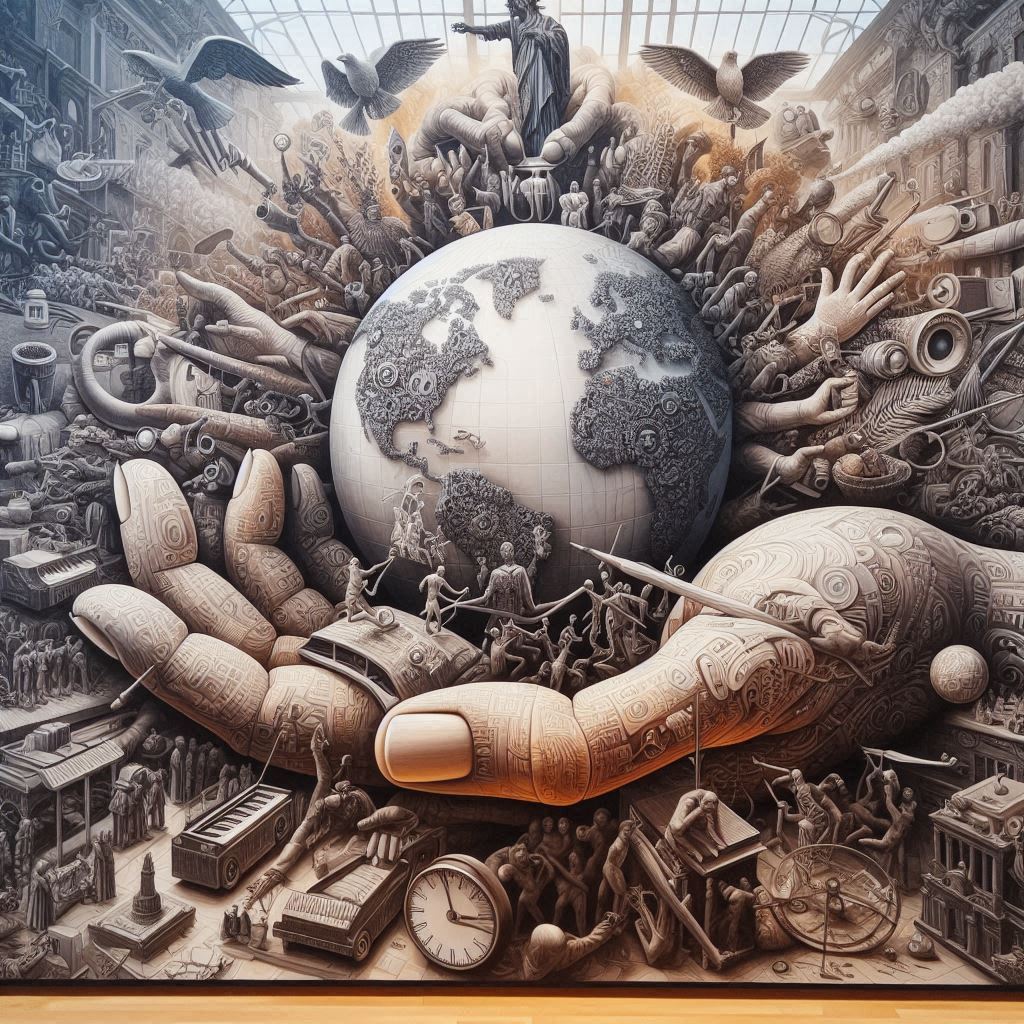
Social Life of Objects: The theory of the social life of objects shifts this perspective. It suggests that objects have their own life stories and intrinsic values that emerge from their interactions with people. According to this framework, objects are not merely static artifacts but active participants in social and cultural exchanges. Humans are just one part of the object’s broader narrative, contributing to its evolving significance.
Tracing the Social Life of Objects: When we view objects through this lens, we uncover their dynamic histories, which can be violent, turbulent, sacred, or religious. For example, objects may have been obtained through colonization, conflict, or coercion, leaving a legacy of trauma. Conversely, certain objects hold religious or spiritual significance, playing a vital role in cultural rituals and practices.
Musealization and the “Death” of Objects: Museums, by preserving and displaying these objects, often interrupt their active social roles. This interruption is referred to as the “death” of objects, as they no longer participate in the living cultural and social exchanges, they were part of.
Repatriation and Restitution: The concepts of repatriation (returning objects to their place of origin) and restitution (restoring or compensating for wrongs) reflect a growing acknowledgment of these objects’ living histories. These processes are seen as ways to rectify historical injustices and recognize the ongoing cultural significance of these objects.
Museums and Transitional Justice: Museums are increasingly seen as evolving institutions with a responsibility to engage in transitional justice. This means addressing historical wrongs and contributing to societal healing and reconciliation. However, implementing restitution can challenge the traditional roles and functions of museums, making it a contentious issue for many museum practitioners.
 Museophile
Leave a comment